 Portionworks
Everything between the supplier invoice and the sale
The jobs a small food business does every week, done once and kept up to date.
What does one actually cost?
Enter what you pay your suppliers once. Every recipe works out its own cost, down to the gram.
- Buy by the 16 kg sack, use by the gram: pack sizes and prices are converted for you.
- Allow for prep loss, like peeled potatoes or trimmed herbs, so the cost per usable gram is right.
- Build recipes from ingredients and sub-recipes (sauces, doughs, fillings). Change one price and everything follows.
- See which ingredients cost the most, so you know where a price rise will hurt.
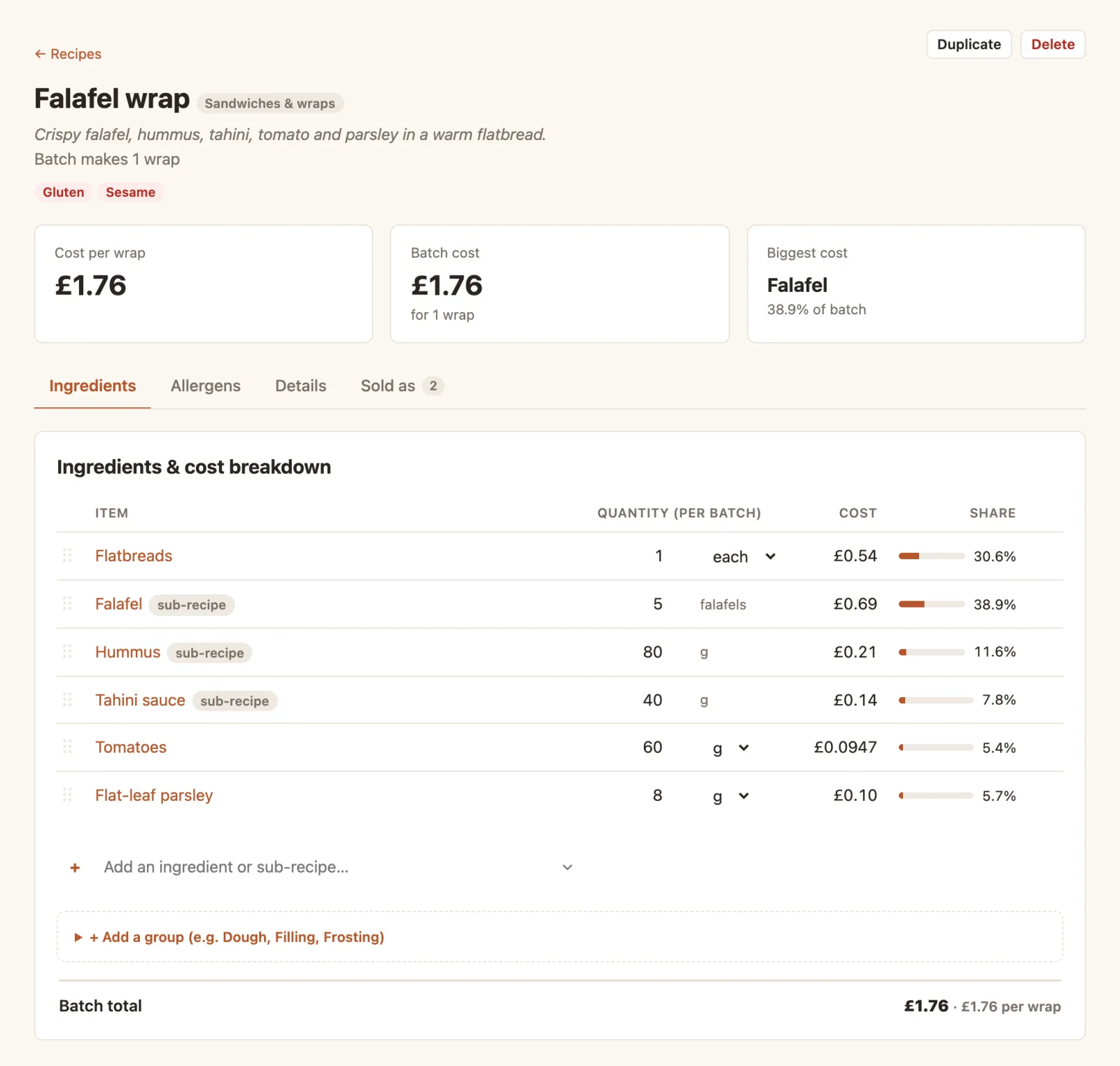
Swipe each screenshot sideways to see all of it.
What should it sell for?
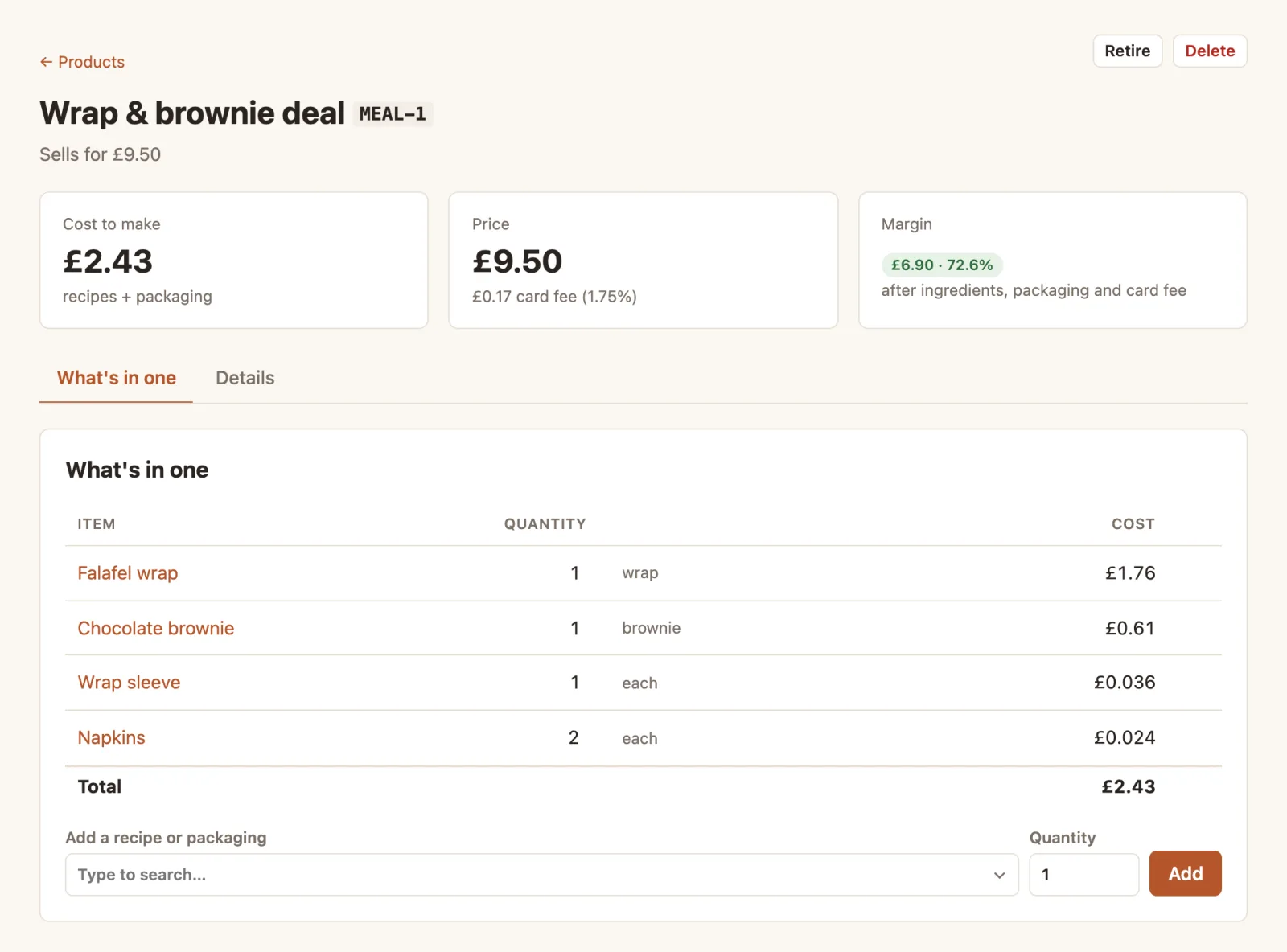
Products are what customers buy: a single item, a meal deal, a box where they choose.
- Packaging is costed like any ingredient, so the box and napkin come off the margin.
- Margins are worked out after card fees, and flagged when they fall below your target.
- Every product gets a short, permanent code to use on your card reader and labels.
What will Saturday make?
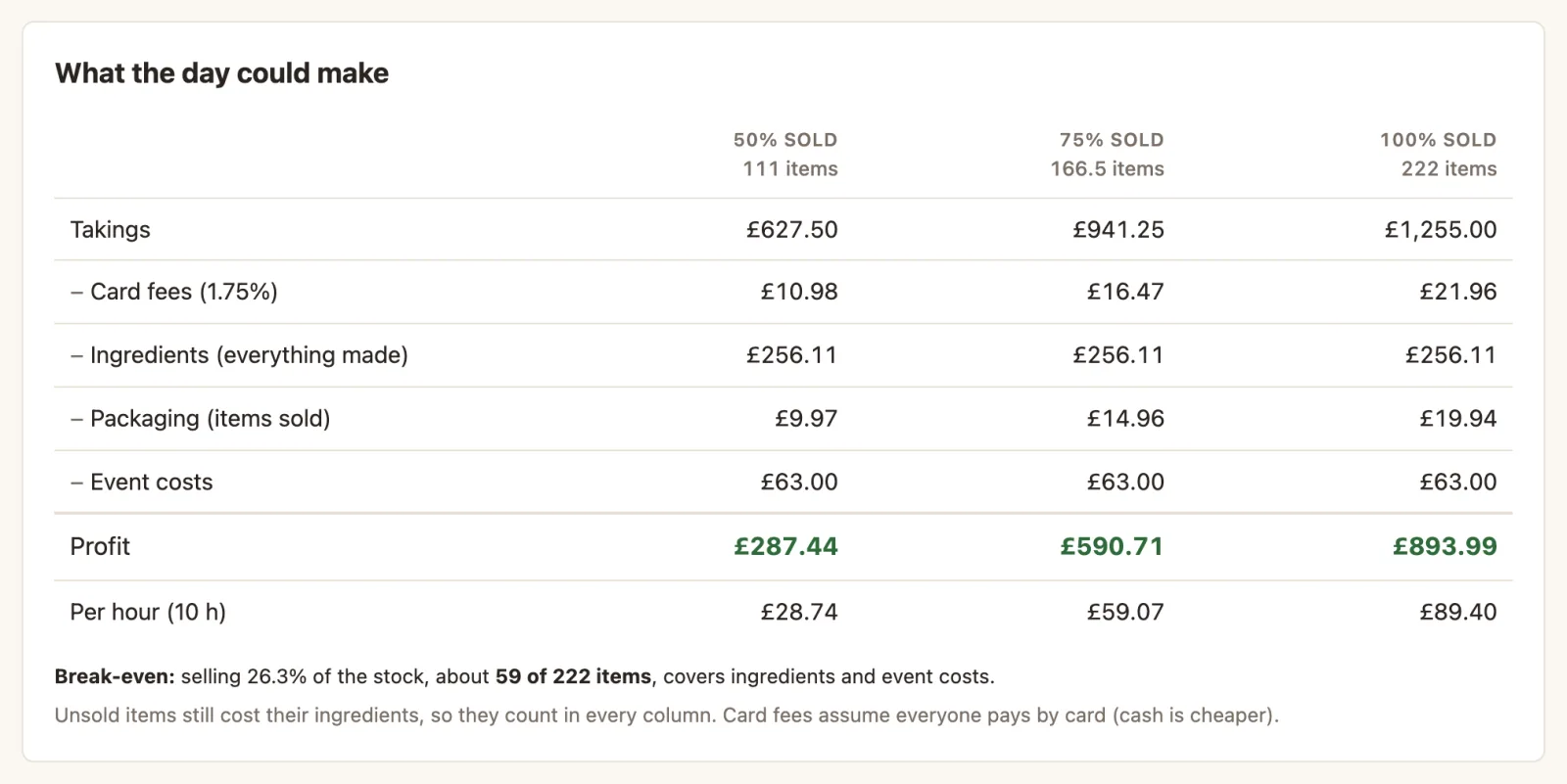
Plan a market, pitch, fair or order by what you're taking, and see what the day could earn before you start.
- Takings and profit at half, three-quarters and all sold, after ingredients, packaging, card fees and the pitch fee.
- Your break-even point and profit per hour.
- Afterwards, enter what actually sold to see how the day really went.
Know what to make and what to buy
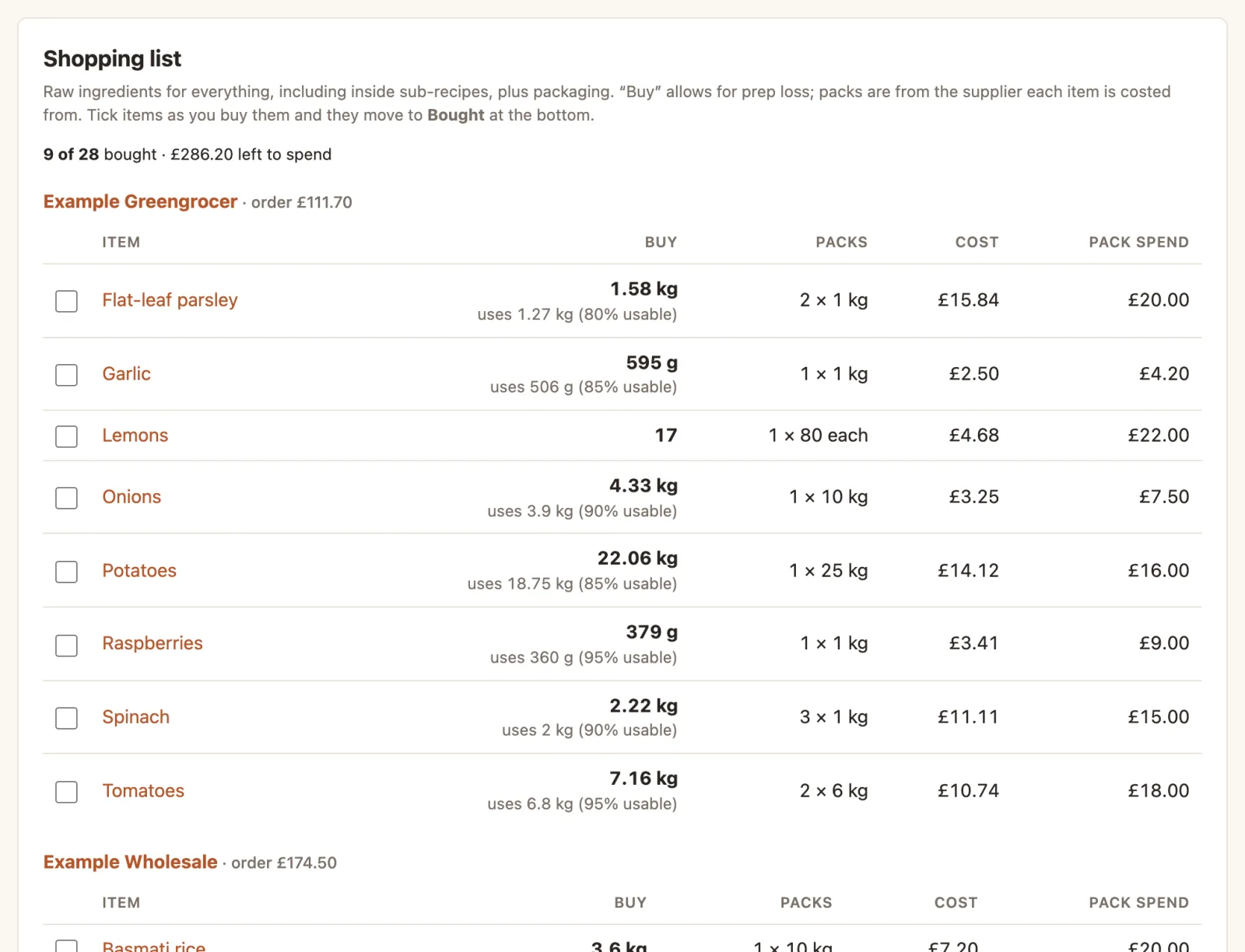
Every event turns into a make list and a shopping list, worked out from your recipes.
- Sub-recipes are scaled for you: how many batches of sauce for 60 wraps.
- Shopping is grouped by supplier, in whole packs, with what's left to spend.
- Tick things off as you buy them, on your phone in the cash and carry.
Everything coming up, at a glance
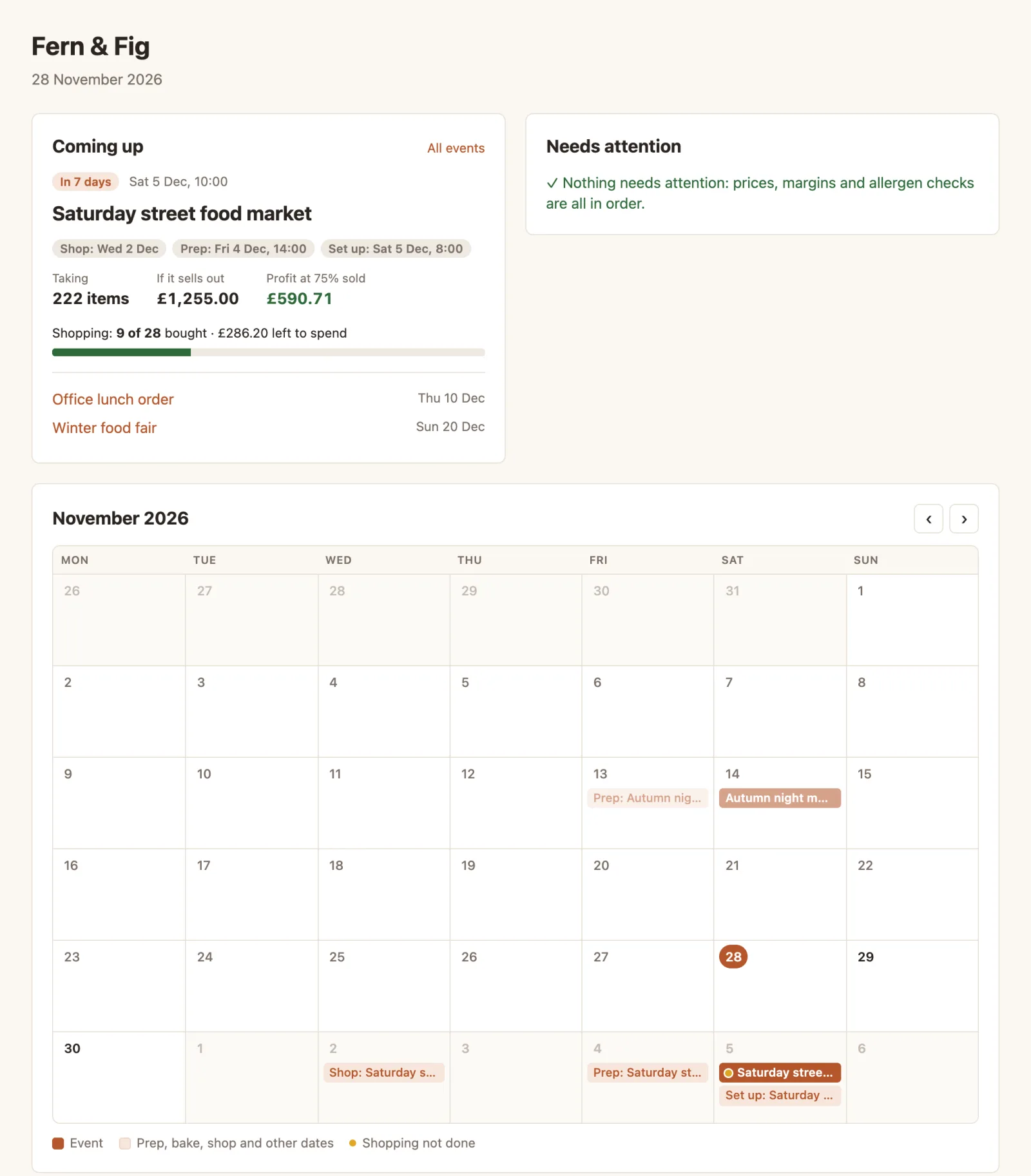
Your home page shows the next event and how ready you are, and a calendar of the month.
- Each event on its day, with its prep, bake and shop days around it.
- A dot where the shopping isn't finished.
- Anything that needs attention, like a missing price or a margin below target.
The allergen chart, done for you
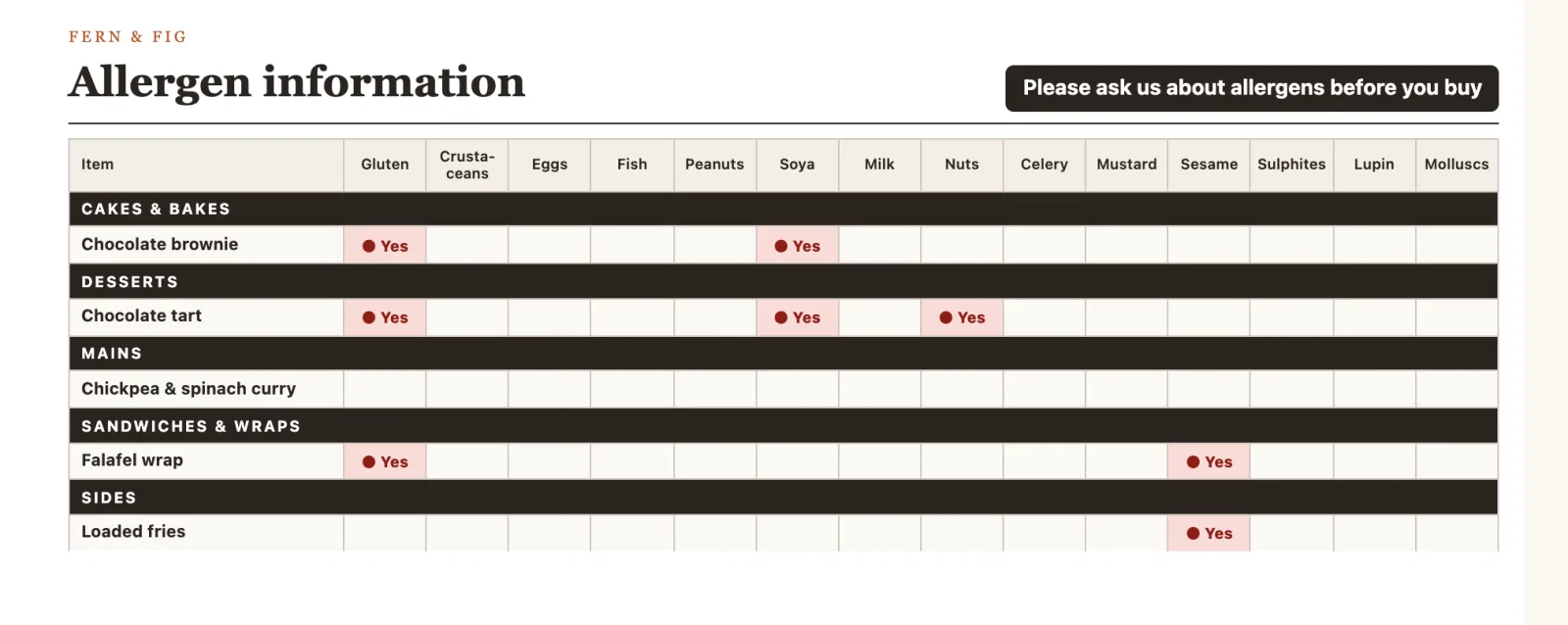
Tick the 14 UK allergens on each ingredient once, from the supplier's spec. Everything else follows.
- Allergens roll up through every sub-recipe into everything you sell.
- Print an A4 allergen chart and A6 item cards with names, descriptions, prices and allergens.
- Anything with an unchecked ingredient prints stamped DRAFT, so nothing goes out unverified.
Also included
Bring your team
Invite a partner or helper by email. No passwords: everyone signs in with an emailed link.
Works on your phone
Check the shopping list at the wholesaler, or the plan on the morning of the market.
Find anything
Search every recipe, ingredient, product, supplier and event from one box.
Private to you
Each business's recipes, prices and photos are kept completely separate, and never sold.
Price history
Every price change is kept with its date, so you can see how costs have moved, and past events keep the prices of their day.
Make any amount
Scale a recipe to 40 instead of 9 and every ingredient and sub-recipe is recalculated, in sensible units.
Cups, spoons or grams
Measure an ingredient however suits the recipe: set 1 cup of flour = 125 g once and use either.
Try it with an example
Open a ready-made example business first, to see how it all fits together before adding your own.